Humans are bipedal primates belonging to the species Homo sapiens (Latin: "wise man" or "knowing man") in Hominidae, the great ape family. They are the only surviving member of the genus Homo. Humans have a highly developed brain, capable of abstract reasoning, language, introspection, and problem solving. This mental capability, combined with an erect body carriage that frees the arms for manipulating objects, has allowed humans to make far greater use of tools than any other species.
Like most higher primates, humans are social by nature. However, humans are uniquely adept at utilizing systems of communication for self-expression, the exchange of ideas, and organization. Humans create complex social structures composed of many cooperating and competing groups, from families to nations. Social interactions between humans have established an extremely wide variety of values, social norms, and rituals, which together form the basis of human society. Humans have a marked appreciation for beauty and aesthetics which, combined with the human desire for self-expression, has led to cultural innovations such as art, literature and music.
Humans are noted for their desire to understand and influence their environment, seeking to explain and manipulate natural phenomena through science, philosophy, mythology and religion.
This natural curiosity has led to the development of advanced tools and skills, which are passed down culturally; humans are the only extant species known to build fires, cook their food, clothe themselves, and use numerous other technologies.
Saturday, November 21, 2009


SCIENCE AND TECHNOLOGY.


Science and technology studies (STS) or scientotechnological studies is the study of how social, political, and cultural values affect scientific research and technological innovation, and how these in turn affect society, politics, and culture. STS scholars are interested in a variety of problems including the relationships between scientific and technological innovations and society, and the directions and risks of science and technology. More than two dozen universities worldwide offer baccalaureate degrees in STS; about half of these also offer doctoral or master's programs
GALLE FORT
Galle fort was built first by the Portuguese, then modified by the Dutch during the 17th century.Even today, after 400 years of existence, it looks new and polished with reconstruction work done by Archaeological Department of Sri Lanka.Today Sri Lankan government and many Dutch people who still own some of the properties inside the fort are looking at making this one of the modern wonders of the world.
Today, the citizens of Dutch fort in Galle are trying to make this a free port and a free trade zone. If successful no taxes are levied on the companies and individuals who reside inside the city.
The Dutch fort also known as Ramparts of Galle withstood the mighty Boxing Day tsunami which destroyed the Galle town. There are many Moor families who live inside this fort along with Sinhalese,Dutch, English, Portuguese and Germans. More details regarding the history of the fort can be found at the visitors centre and at the Dutch period museum inside the Fort.
The tax system proposed inside the fort says there is no withholding tax, no tax on capital gains, no corporate tax for ten years from the start of the business, no VAT, and no profit tax.
Today, the citizens of Dutch fort in Galle are trying to make this a free port and a free trade zone. If successful no taxes are levied on the companies and individuals who reside inside the city.
The Dutch fort also known as Ramparts of Galle withstood the mighty Boxing Day tsunami which destroyed the Galle town. There are many Moor families who live inside this fort along with Sinhalese,Dutch, English, Portuguese and Germans. More details regarding the history of the fort can be found at the visitors centre and at the Dutch period museum inside the Fort.
The tax system proposed inside the fort says there is no withholding tax, no tax on capital gains, no corporate tax for ten years from the start of the business, no VAT, and no profit tax.
GALLE FORT, MY HOMETOWN.
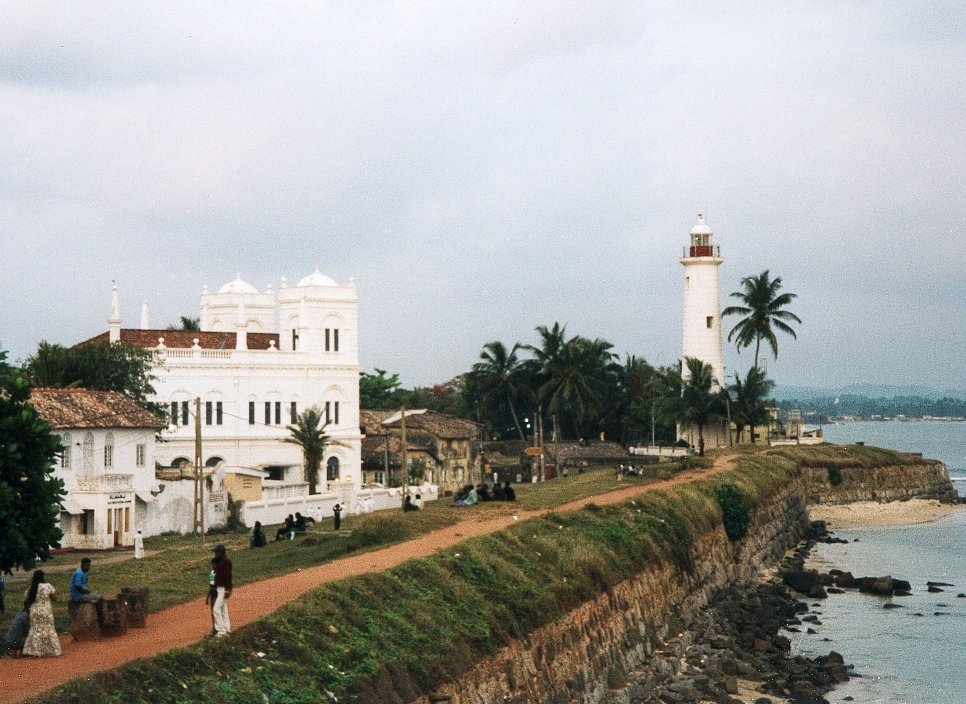
The Galle dutch fortress was built by the Dutch during their reign of rule between 1656 to 1796. It is the largest and the most secured fortress in Sri Lanka.
It was declared an archeological reserve by the U. N. since 1969.
In December 1988, UNESCO declared Galle Fortress as a World Heritage Site and their 38th Monument. A Parliament Act titled Galle Heritage Foundation Act was passed in 1994 in Sri Lanka.
In addition to all these declarations, Galle Fort is unique, very special and charming as there are no other sites, areas, fortress or location when compared with Galle Fort walled city of 38 hectares (90 acres) in the whole country.
Symbol of history
The Fort of Galle is the living symbol of all this history unless the Sri Lanka Government becomes conscious of its responsibility to protect and preserve the tangible remains of our history, not only in Galle, but all over Sri Lanka all will be lost. Let the world heritage site of Galle remain symbolic of its heritage and not become a centre of palatial dwellings of foreigners, night clubs and all that go with them.
Galle is one of 213 places of great historical value in the world that should be conserved and protected for posterity.
Perhaps the earliest recorded reference to Galle comes from the great Arab traveller Ibn Battuta, who visited the port--which he calls Qali--in the mid-14th century. The Portuguese first arrived in 1505, when a fleet commanded by Lorenzo de Almeida took shelter from a storm in the lee of the town. Clearly the strategic significance of the harbour impressed the Portuguese, for 82 years later, in 1587, they seized control of the town from the Sinhala kings and began the construction of Galle Fort. This event marked the beginning of almost four centuries of European domination of the city, resulting in the fascinating hybrid--architecturally, culturally and ethnically--which Galle is today.
The Dutch captured the city from the Portuguese in 1640, and immediately began strengthening the fortifications. They remained for almost 150 years, until the city was in turn taken by the British in 1796. Not until 1947, when Ceylon gained its independence from the British, did Galle become, once again, an independent city--and by this time the long years of association with European colonialism had left an indelible stamp on the city which makes it unique in today's Sri Lanka. In recognition of this fact, the Old City of Galle--essentially the fort and its surroundings--was declared a World Heritage Site in 1988.
Galle is one of 213 places of great historical value in the world that should be conserved and protected for posterity.
Perhaps the earliest recorded reference to Galle comes from the great Arab traveller Ibn Battuta, who visited the port--which he calls Qali--in the mid-14th century. The Portuguese first arrived in 1505, when a fleet commanded by Lorenzo de Almeida took shelter from a storm in the lee of the town. Clearly the strategic significance of the harbour impressed the Portuguese, for 82 years later, in 1587, they seized control of the town from the Sinhala kings and began the construction of Galle Fort. This event marked the beginning of almost four centuries of European domination of the city, resulting in the fascinating hybrid--architecturally, culturally and ethnically--which Galle is today.
The Dutch captured the city from the Portuguese in 1640, and immediately began strengthening the fortifications. They remained for almost 150 years, until the city was in turn taken by the British in 1796. Not until 1947, when Ceylon gained its independence from the British, did Galle become, once again, an independent city--and by this time the long years of association with European colonialism had left an indelible stamp on the city which makes it unique in today's Sri Lanka. In recognition of this fact, the Old City of Galle--essentially the fort and its surroundings--was declared a World Heritage Site in 1988.
Galle is one of 213 places of great historical value in the world that should be conserved and protected for posterity.
Perhaps the earliest recorded reference to Galle comes from the great Arab traveller Ibn Battuta, who visited the port--which he calls Qali--in the mid-14th century. The Portuguese first arrived in 1505, when a fleet commanded by Lorenzo de Almeida took shelter from a storm in the lee of the town. Clearly the strategic significance of the harbour impressed the Portuguese, for 82 years later, in 1587, they seized control of the town from the Sinhala kings and began the construction of Galle Fort. This event marked the beginning of almost four centuries of European domination of the city, resulting in the fascinating hybrid--architecturally, culturally and ethnically--which Galle is today.
The Dutch captured the city from the Portuguese in 1640, and immediately began strengthening the fortifications. They remained for almost 150 years, until the city was in turn taken by the British in 1796. Not until 1947, when Ceylon gained its independence from the British, did Galle become, once again, an independent city--and by this time the long years of association with European colonialism had left an indelible stamp on the city which makes it unique in today's Sri Lanka. In recognition of this fact, the Old City of Galle--essentially the fort and its surroundings--was declared a World Heritage Site in 1988.
ANURADHAPURA.
For over 1000 years, Sinhalese kings – and occasional South Indian interlopers – ruled from the palaces of Anuradhapura. It was the most extensive and important of the Sri Lankan royal capitals, but its size and the length of its history, and the length of time since its downfall make it more difficult to comprehend than younger, shorter-lived Polonnaruwa. Current-day Anuradhapura is a rather pleasant, planned city. Mature trees shade the main guesthouse areas, and the main street is orderly compared to the ugly concrete agglomerations seen in so many other regional centres.
History
Anuradhapura first became a capital in 380 BC under Pandukabhaya, but it was under Devanampiya Tissa (r 247–207 BC), during whose reign Buddhism reached Sri Lanka, that it first rose to great importance. Soon Anuradhapura became a great and glittering city, only to fall before a South Indian invasion – a fate that was to befall it repeatedly for more than 1000 years. But before long the Sinhalese hero Dutugemunu led an army from a refuge in the far south to recapture Anuradhapura. The ‘Dutu’ part of his name, incidentally, means ‘undutiful’, because his father, fearing for his son’s safety, forbade him to attempt to recapture Anuradhapura. Dutugemunu disobeyed him, and later sent his father a woman’s ornament to indicate what he thought of his courage.
Dutugemunu (r 161–137 BC) set in motion a vast building program that included some of the most impressive monuments in Anuradhapura today. Other important kings who followed him included Valagamba, who lost his throne in another Indian invasion but later regained it, and Mahasena (r AD 276–303), the last ‘great’ king of Anuradhapura, who was the builder of the colossal Jetavanarama Dagoba. He also held the record for tank construction, building 16 of them in all, plus a major canal. Anuradhapura was to survive for another 500 years before finally being replaced by Polonnaruwa, but it was harassed by invasions from South India again and again – invasions made easier by the cleared lands and great roads that were a product of Anuradhapura’s importance.
History
Anuradhapura first became a capital in 380 BC under Pandukabhaya, but it was under Devanampiya Tissa (r 247–207 BC), during whose reign Buddhism reached Sri Lanka, that it first rose to great importance. Soon Anuradhapura became a great and glittering city, only to fall before a South Indian invasion – a fate that was to befall it repeatedly for more than 1000 years. But before long the Sinhalese hero Dutugemunu led an army from a refuge in the far south to recapture Anuradhapura. The ‘Dutu’ part of his name, incidentally, means ‘undutiful’, because his father, fearing for his son’s safety, forbade him to attempt to recapture Anuradhapura. Dutugemunu disobeyed him, and later sent his father a woman’s ornament to indicate what he thought of his courage.
Dutugemunu (r 161–137 BC) set in motion a vast building program that included some of the most impressive monuments in Anuradhapura today. Other important kings who followed him included Valagamba, who lost his throne in another Indian invasion but later regained it, and Mahasena (r AD 276–303), the last ‘great’ king of Anuradhapura, who was the builder of the colossal Jetavanarama Dagoba. He also held the record for tank construction, building 16 of them in all, plus a major canal. Anuradhapura was to survive for another 500 years before finally being replaced by Polonnaruwa, but it was harassed by invasions from South India again and again – invasions made easier by the cleared lands and great roads that were a product of Anuradhapura’s importance.
ADAM'S PEAK.
Introducing Adam’s Peak (Sri Pada)
Located in a beautiful and fascinating area of the southern Hill Country, this lofty peak has sparked the imagination for centuries. It is variously known as Adam’s Peak (the place where Adam first set foot on earth after being cast out of heaven), Sri Pada (Sacred Footprint, left by the Buddha as he headed towards paradise) or Samanalakande (Butterfly Mountain, where butterflies go to die). Some believe the huge ‘footprint’ on the top of the 2243m peak to be that of St Thomas, the early apostle of India, or even of Lord Shiva.
Whichever legend you care to believe, this place has been a pilgrimage centre for over 1000 years. King Parakramabahu and King Nissanka Malla of Polonnaruwa provided ambalamas (resting places to shelter weary pilgrims) up the mountain.
t’s not only the sacred footprint that pilgrims seek. As the first rays of dawn light up the holy mountain you’re treated to an extremely fine view – the Hill Country rises to the east, while to the west the land slopes away to the sea. Colombo, 65km away, is easily visible on a clear day. It’s little wonder that English author John Stills, in his book Jungle Tide, described the peak as ‘one of the vastest and most reverenced cathedrals of the human race’.
Interesting as the ascent is, and beautiful as the dawn is, Adam’s Peak saves its pièce de résistance for a few minutes after dawn. The sun casts a perfect shadow of the peak onto the misty clouds down towards the coast. As the sun rises higher this eerie triangular shadow races back towards the peak, eventually disappearing into its base
Located in a beautiful and fascinating area of the southern Hill Country, this lofty peak has sparked the imagination for centuries. It is variously known as Adam’s Peak (the place where Adam first set foot on earth after being cast out of heaven), Sri Pada (Sacred Footprint, left by the Buddha as he headed towards paradise) or Samanalakande (Butterfly Mountain, where butterflies go to die). Some believe the huge ‘footprint’ on the top of the 2243m peak to be that of St Thomas, the early apostle of India, or even of Lord Shiva.
Whichever legend you care to believe, this place has been a pilgrimage centre for over 1000 years. King Parakramabahu and King Nissanka Malla of Polonnaruwa provided ambalamas (resting places to shelter weary pilgrims) up the mountain.
t’s not only the sacred footprint that pilgrims seek. As the first rays of dawn light up the holy mountain you’re treated to an extremely fine view – the Hill Country rises to the east, while to the west the land slopes away to the sea. Colombo, 65km away, is easily visible on a clear day. It’s little wonder that English author John Stills, in his book Jungle Tide, described the peak as ‘one of the vastest and most reverenced cathedrals of the human race’.
Interesting as the ascent is, and beautiful as the dawn is, Adam’s Peak saves its pièce de résistance for a few minutes after dawn. The sun casts a perfect shadow of the peak onto the misty clouds down towards the coast. As the sun rises higher this eerie triangular shadow races back towards the peak, eventually disappearing into its base
Wednesday, November 18, 2009
SRI LANKA, THE PEARL OF THE INDIAN OCEAN.

SRI LANKA
Sri Lanka (from the Sanskrit “Venerable Island”[citation needed]), officially the Democratic Socialist Republic of Sri Lanka (pronounced /ˌʃriːˈlɑːŋkɑː/, Sinhala: , Tamil: இலங்கை; known as Ceylon (/sɪˈlɒn/) before 1972 and as Taprobane (/təˈprɒbəniː/) in ancient times), is an island country in South Asia, located about 31 kilometres (19.3 mi) off the southern coast of India. It is home to around twenty million people.
As a result of its location in the path of major sea routes, Sri Lanka is a strategic naval link between West Asia and South East Asia.[citation needed] It has also been a center of the Buddhist religion and culture from ancient times as well as being a bastion of Hinduism. The Sinhalese community forms the majority of the population; Tamils, who are concentrated in the north and east of the island, form the largest ethnic minority. Other communities include Moors, Burghers, Kaffirs and the Malays.
The country is famous for the production and export of tea, coffee, coconuts, rubber and cinnamon - which is native to the country. The natural beauty of Sri Lanka's tropical forests, beaches and landscape, as well as its rich cultural heritage, make it a world famous tourist destination.[citation needed] The island also boasts the first female Prime Minister in the world, Sirimavo Bandaranaike.
After over two thousand years of rule by local kingdoms, parts of Sri Lanka were colonized by Portugal and the Netherlands beginning in the 16th century, before control of the entire country was ceded to the British Empire in 1815.[citation needed] During World War II, Sri Lanka served as an important base for Allied forces in the fight against the Japanese Empire. A nationalist political movement arose in the country in the early 20th century with the aim of obtaining political independence, which was eventually granted by the British after peaceful negotiations in 1948.
Subscribe to:
Posts (Atom)
