Sunday, November 22, 2009

MEDICINE/MEDICAL EDUCATION.


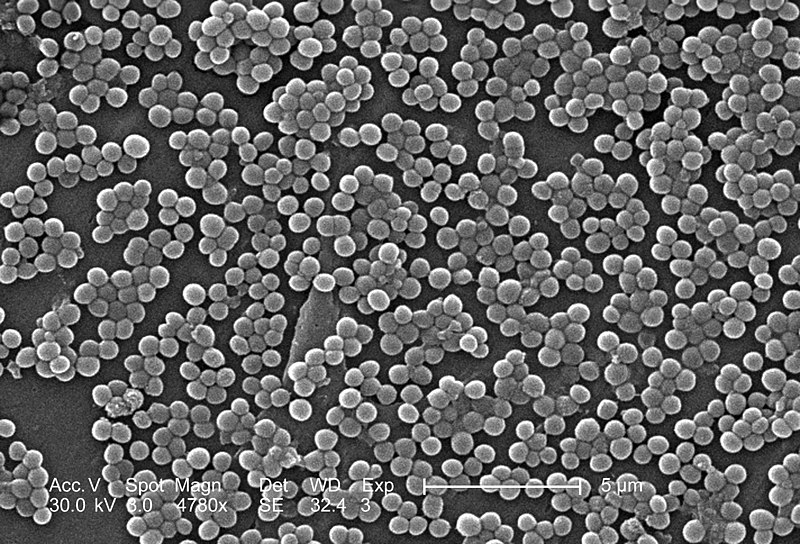
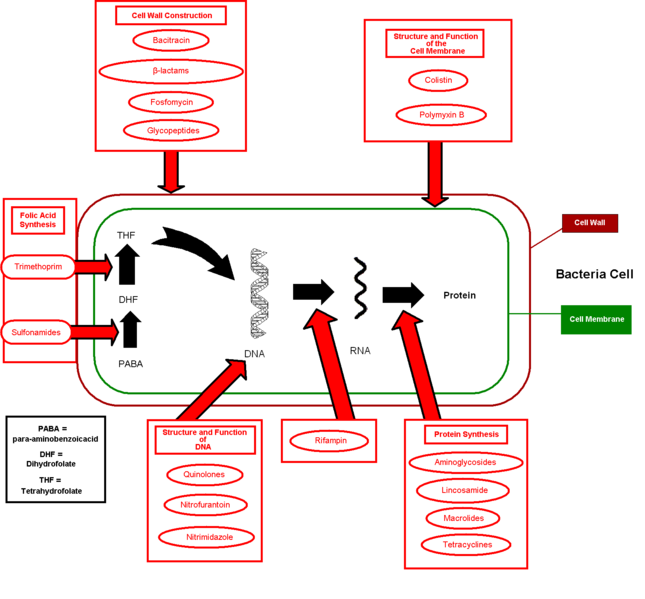
In common usage, an antibiotic (from the Ancient Greek: ἀντί – anti, "against", and βίος – bios, "life") is a substance or compound that kills, or inhibits the growth of, bacteria.[1] Antibiotics belong to the broader group of antimicrobial compounds, used to treat infections caused by microorganisms, including fungi and protozoa.
The term "antibiotic" was coined by Selman Waksman in 1942 to describe any substance produced by a microorganism that is antagonistic to the growth of other microorganisms in high dilution.[2] This original definition excluded naturally occurring substances that kill bacteria but are not produced by microorganisms (such as gastric juice and hydrogen peroxide) and also excluded synthetic antibacterial compounds such as the sulfonamides. Many antibiotics are relatively small molecules with a molecular weight less than 2000 Da.[citation needed]
With advances in medicinal chemistry, most antibiotics are now semisynthetic—modified chemically from original compounds found in nature,[3] as is the case with beta-lactams (which include the penicillins, produced by fungi in the genus Penicillium, the cephalosporins, and the carbapenems). Some antibiotics are still produced and isolated from living organisms, such as the aminoglycosides, and others have been created through purely synthetic means: the sulfonamides, the quinolones, and the oxazolidinones. In addition to this origin-based classification into natural, semisynthetic, and synthetic, antibiotics may be divided into two broad groups according to their effect on microorganisms: those that kill bacteria are bactericidal agents, while those that only impair bacterial growth are known as bacteriostatic agents.

MEDICINE/MEDICAL EDUCATION.


MEDICINE/MEDICAL EDUCATION.

Medicine is the art and science of healing. It encompasses a range of health care practices evolved to maintain and restore health by the prevention and treatment of illness.
Contemporary medicine applies health science, biomedical research, and medical technology to diagnose and treat injury and disease, typically through medication, surgery, or some other form of therapy. The word medicine is derived from the Latin ars medicina, meaning the art of healing.[1][2]
Though medical technology and clinical expertise are pivotal to contemporary medicine, successful face-to-face relief of actual suffering continues to require the application of ordinary human feeling and compassion, known in English as bedside manner.[3]
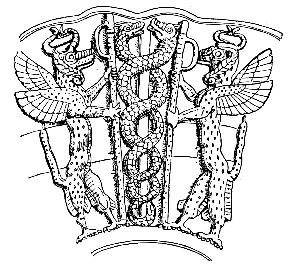
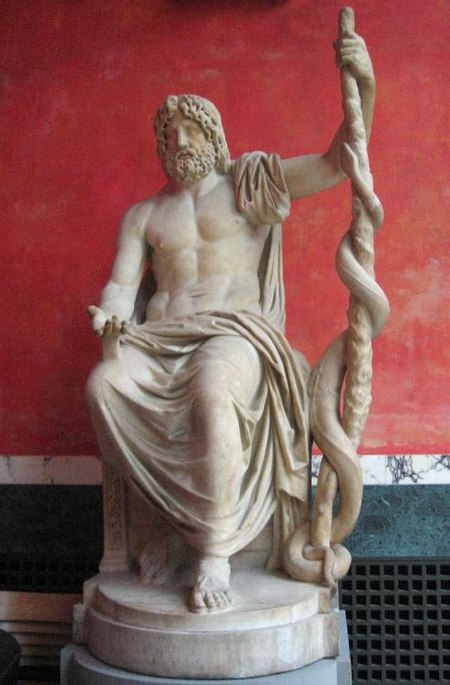
The Rod of Asclepius is the symbol associated with medicine, which comes from the Greek God of medicine and healing, Asclepius. The Caduceus is sometimes wrongly used for this purpose, though this practice is mainly seen in North America.

Medical education and training varies around the world. It typically involves entry level education at a university medical school, followed by a period of supervised practice or internship, and/or residency. This can be followed by postgraduate vocational training. A variety of teaching methods have been employed in medical education, still itself a focus of active research.
Many regulatory authorities require continuing medical education, since knowledge, techniques and medical technology continue to evolve at a rapid rate.

Saturday, November 21, 2009

DISTRIBUTION OF MOORS IN SRI LANKA


Distribution of Moors in Sri Lanka based on 2001 and 1981 (italic) census. (Note: Large population movements have occurred since 1981, hence 2001 data for Northeastern areas (italic) do not exist
The Sri Lankan Moors (commonly referred to as Muslims) are the third largest ethnic group in Sri Lanka comprising 8% of the country's total population (approx. 2 million people in 2005). They are predominantly followers of Islam. The Moors trace their ancestry to Arab traders who settled in Sri Lanka some time between the eighth and fifteenth centuries. The Arabic language brought by the early merchants is no longer spoken, though many Arabic words and phrases are still commonly used. Until the recent past, the Moors employed Arwi as their mother tongue,[1] though this is also extinct as a spoken language.

Moors today use Tamil as their primary language with influence from Arabic.[1] Those from central and southern Sri Lanka also widely use Sinhala, an Indo-European language spoken by the ethnic Sinhalese majority in Sri Lanka.

The Sri Lankan Moors lived primarily in coastal trading and agricultural communities, preserving their Islamic cultural heritage while adopting many Southern Asian customs. During the period of Portuguese colonisation, the Moors suffered widespread persecution, and many fled to the Central Highlands and the East Coast, where their descendants remain.

Religion
Islam in Sri Lanka

Sri Lankan Moors are predominantly followers of Islam, hence their cultural identity is strongly defined by their religion. Unlike the Sinhalese and Tamil people who adhere to several faiths, virtually all Moors adhere to Islam, hence in a Sri Lankan context the term Muslim is often used interchangeably as both a religious and ethnic term to describe the Moors. Most Sri Lankan Moors follow Sunni Islam through the Shafi school of thought, though there are also small populations that follow other Islamic sects such as Shia Islam.


Culture

The Sri Lankan Moors possess a unique culture that differentiates them from the dominant Sinhalese and Tamil ethnic groups on the island. The cultural domain of Sri Lankan Moors has been strongly shaped by Islam, hence most customs and practices are dictated by Islamic law. While preserving many of their ancestral customs, the Moors have also adopted several South Asian practices.

HADJJ FESTIVAL.


Islamic Pilgrimage "Hajj"
&
Festival of Sacrifice "Eid Al-Adha"

"Hajj" is one of the "five pillars" of the Islamic faith. (The other "Pillars" include a declaration of faith, daily prayers, offering regular charity, and fasting during the month of Rmadan). Hajj activities take place during six days (8th-13th) of the Islamic lunar month of Dhul-Hijjah. Pilgrimage is a once-in-a-lifetime obligation for those Muslims who have the physical and financial ability to undertake the journey. It is also a form of worship that involves the entire being: body, mind and soul.

The Obligatory and optional activities of "Hajj" include:
* Entrance into a state of self-control called ihram, during which pilgrims are forbidden to harm living cretures or even raise the voice in anger. The state of ihram is signified (for men) by the wearing of two pieces of unsewn white cloth. No specific clothing is prescribed for female pilgrims.

* Circling of the Holy Ka'aba, the stone building Muslims believe was originally built by Abraham and his son Ishmael. The Ka'aba is viewed as the first sanctuary on earth dedicated to the worship of the One God. It is a symbol of unity for Muslims because all prayers, wherever they are performed, are oriented in the direction of Ka'aba.

* The Sa'i, or "hastening" between two small hills near the Ka'aba, to commemorate Hagar's search for water to offer her son Ishmael.

* The stoning of three pillars representing Satan's temptation of Abraham. The stoning indicates the pilgrim's rejection of evil deeds.

* Cutting the hair to symbolize the completion of "Hajj".

* Sacrifice of an animal to help the poor, and in remembrance Abraham's willingness to sacrifice his son Ishmael at God's command. The meat is distributed to relatives and to the needy.

When the major portion of the pilgrimage is completed, Muslims worldwide gather for communal prayers on the first day (March 16*) of Eid ul-Ad'ha (eed-al-odd-ha), the second of the two major Muslim holidays.

NOTE - Because the beginning of Islamic lunar months depends on th eactuals sighting of the new moon, the start date for Hajj and Eid ul-Ad'ha may vary.

HUMAN BEINGS